

Table of Contents
Related news
How Can Buyers Plan Custom Rainwear for Branded Workwear Orders?
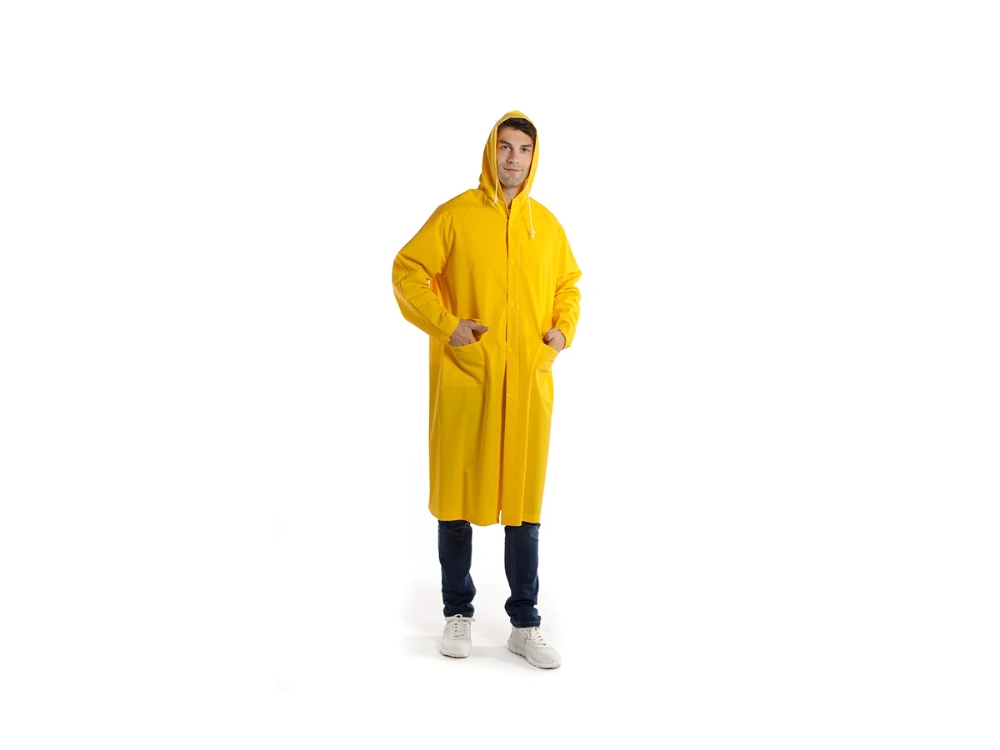
A rain jacket becomes part of the uniform once crews wear it every week. For distributors, contractors, utilities, and facility buyers, Chenyuan custom rainwear is easier to plan when the order starts with real use: job role, weather exposure, color policy, logo position, size spread, packing, and repeat demand. The goal is not to choose a nice yellow coat from a catalog and hope it works. A branded workwear order should give workers dry coverage, make teams easy to identify, and keep the buyer able to reorder the same rainwear without starting from zero. This guide explains how to plan custom workwear, workwear with logo, and custom work uniforms for practical B2B purchasing.
What Business Problem Should Custom Rainwear Solve First?
Before asking for artwork placement or fabric weight, buyers should define the duty of the garment. Rainwear for road crews, warehouse loading teams, outdoor event staff, and delivery contractors can look similar in photos, yet the order details are rarely the same. A clear use case gives the supplier better ground for sample advice and quotation.
Brand Visibility on Wet Job Sites
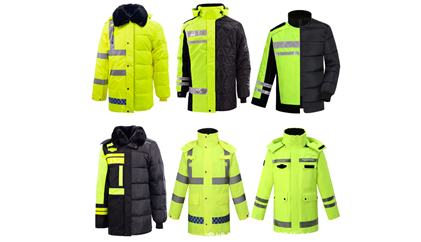
Custom workwear is often bought because the team must be recognized quickly in rain, spray, or low light. Branded workwear can carry a company mark on the chest, back, sleeve, or storage pouch, but the mark should not interrupt seams, vents, or reflective bands. If the order uses workwear with logo for public-facing crews, confirm the viewing distance first. A small chest mark may work for supervisors, while event teams or roadside workers may need a larger back logo and high-contrast colors.
Safety Signals Before Decoration
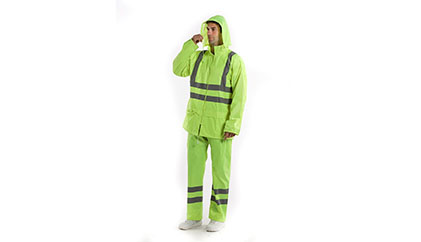
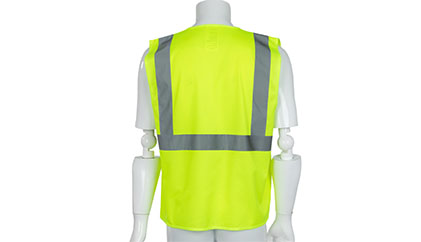
The color and reflective layout should be treated as part of the specification, not as decoration added at the end. Orange, lime, yellow, and navy each send a different signal on a worksite. For buyers comparing branded workwear programs, the practical question is whether the worker can be seen, sorted by role, and identified by the public. Logo printing should support that goal, not compete with it.
Chenyuan also lists a workwear product line for buyers who want rain protection to sit inside a wider uniform program.
How Should Buyers Specify Fabric, Logo Method, and Size Runs?
A custom order becomes easier to quote when every visible detail has a reason. Fabric, coating, seam treatment, hood structure, pocket layout, reflective tape, and logo method all affect comfort and long-term appearance. The buyer does not need to write a technical manual, but the RFQ should give enough facts for the factory to recommend a workable sample.
Fabric Choice by Use Case
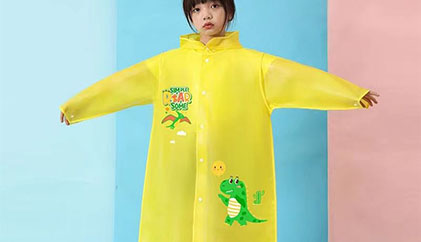
Rainwear for short visitor use can be lighter than rainwear for a worker bending, lifting, and climbing for a full shift. Polyester PVC, PU coating, Oxford cloth, and EVA each feel different in hand, pack differently, and respond differently to repeated folding. For custom work uniforms, the fabric decision should match the workday: light movement, heavy outdoor work, cold-weather layering, or high-frequency packing in vehicles.
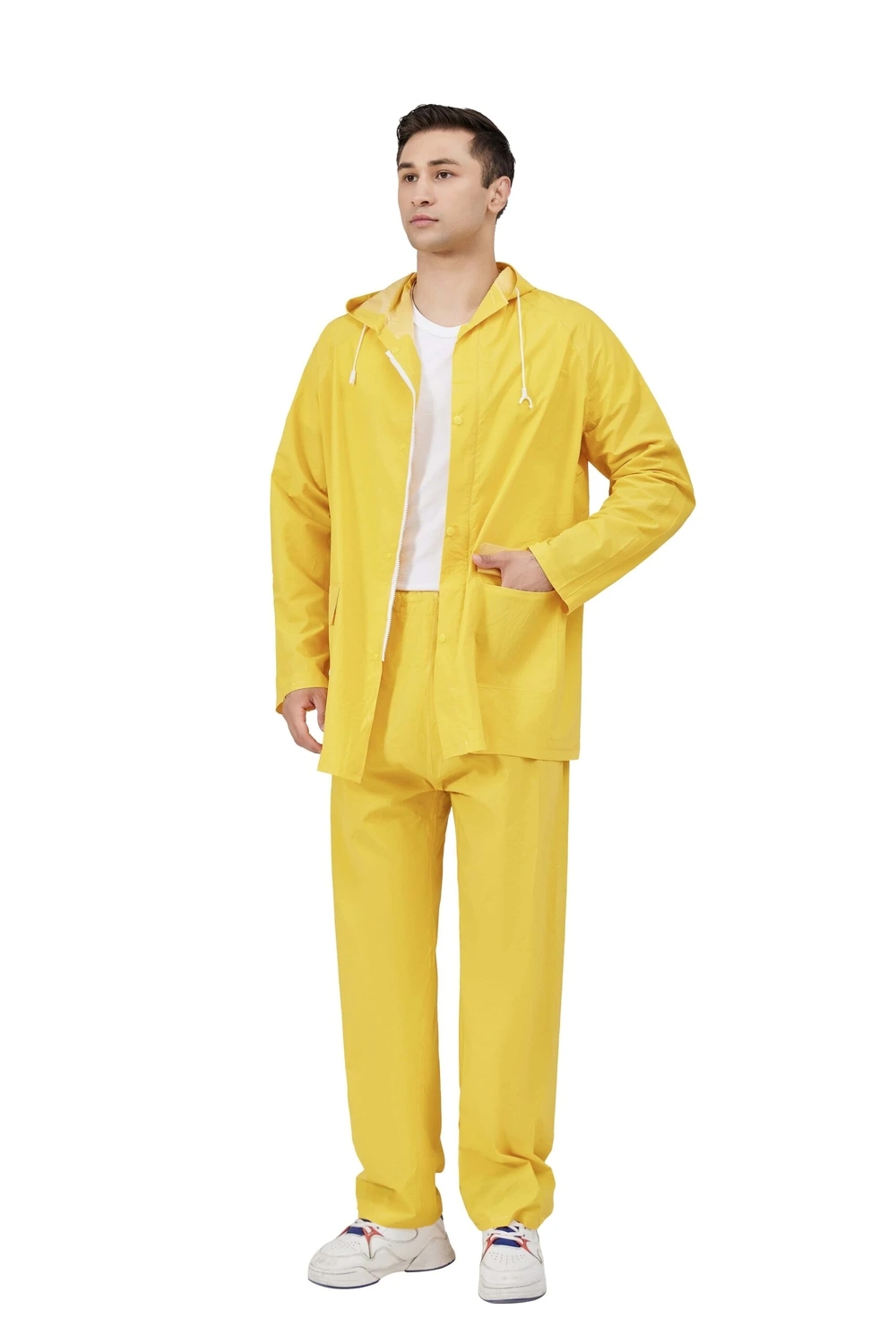
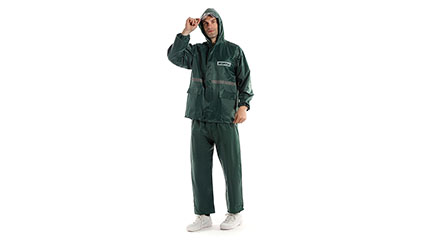
The Custom Polyester PVC Rainsuit page is a useful product reference for buyers building a waterproof set around outdoor work coverage.
Logo Position and Marking Method
Workwear with logo needs an artwork file, size in centimeters, color reference, and clear location notes. Many buyers send a brand file but forget to state whether the logo should sit above a pocket, below a reflective strip, or across the back panel. Ask for a marked drawing or a digital mockup before sampling. If the project uses several colors, request one approved color card so the rainwear and the rest of the uniform family stay visually close.
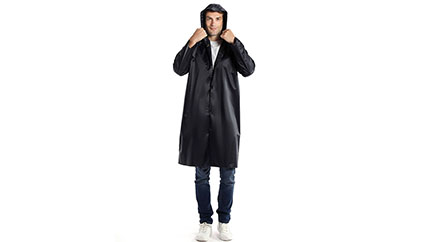
For logo-focused rainwear, the Waterproof PVC polyester hooded raincoat with custom logo print design page gives buyers a direct product example to discuss with the supplier.
Size Set and Sample Approval
Bulk rainwear orders often fail at the size stage, not at the fabric stage. Rainwear sits over shirts, fleece, safety vests, or tool belts, so the outer garment needs room without becoming loose around cuffs and hood openings. A practical size run should include the largest common body type in the crew. For custom work uniforms, ask for one fit sample and one production sample before releasing the full order.
Which Order Details Should Be Clear Before an RFQ?
The RFQ should make the supplier picture the finished shipment: who wears it, how it is packed, where the logo appears, and how future reorders will be handled. Missing details slow quotation and invite assumptions. A short buyer checklist is often enough to keep communication tidy before samples and deposits are discussed.
|
Decision Area |
What Buyers Should Confirm |
Why It Matters |
|
Logo file |
Vector artwork, size, position, and color reference |
Keeps branded workwear consistent across repeat batches |
|
Material |
Fabric base, coating, thickness, lining, and seam request |
Matches rainwear to job duration and weather exposure |
|
Size run |
Quantity by size, layering allowance, and sample wearer notes |
Reduces returns and uncomfortable custom work uniforms |
|
Packing |
Individual bag, carton mark, barcode, or project label |
Helps distributors and site managers receive mixed orders |
How Can Supplier Communication Reduce Rework?
Good supplier communication is less about long emails and more about stable reference points. A buyer should send the same logo file, color note, size chart, packing request, and target delivery date to every supplier being compared. That makes price, sample timing, and product advice easier to compare fairly. For two-piece programs, the rainsuit category helps buyers compare jacket-and-pants forms before sampling.
Artwork Files and Color References
For workwear with logo, send vector artwork whenever possible. If only a bitmap file is available, ask the supplier whether it is clear enough before the sample is made. Buyers should also name the garment color in plain terms and, for larger programs, attach a Pantone or fabric swatch reference. A two-minute check at this stage can save a full sample cycle.
Buyers planning high-visibility accessories can also review Chenyuan high-visibility items with custom logos as part of a wider branded workwear package.
Packaging, MOQ, and Repeat Orders
Custom workwear should be planned as a repeatable program, even if the first order is modest. Ask how cartons will be marked, whether each garment can carry a size sticker, and whether mixed colors or mixed sizes change the minimum order quantity. If rainwear is being distributed across branches, carton-level labels can save time during receiving and reduce sorting mistakes.
Field Feedback Before Repeat Orders
After the first delivery, collect short comments from supervisors and wearers before repeating the order. Useful feedback includes sleeve length, hood fit, pocket access, heat buildup, logo durability, and any common tear points. This turns custom rainwear from a single purchase into a managed uniform program. It also helps buyers improve custom work uniforms without changing the whole specification.
Conclusion
Custom rainwear is strongest when the order is planned like protective branded workwear, not a loose promotional item. Buyers should define the job site, garment type, logo method, size run, packing method, MOQ, sample process, and reorder path before quotation. Chenyuan works in raincoats, rainsuits, workwear, and related waterproof products, so the brand can support buyers who need practical rainwear details tied to logo and uniform planning. For distributors, contractors, and project buyers preparing custom workwear or custom work uniforms, the best next step is to prepare artwork and order data, then Contact Us for sample and quotation discussion.
FAQs
Q1: What is the first step in planning custom rainwear?
A1: Define the job role, weather exposure, logo position, size run, and packing request.
Q2: Can custom workwear and rainwear use the same logo file?
A2: Yes, but confirm size, color, and placement for each garment type.
Q3: Is workwear with logo suitable for custom work uniforms?
A3: Yes, if samples confirm fit, comfort, visibility, and logo durability.
 E-mail
 Whatsapp
 Leave Message
 top
top