

Best One-piece Rainsuit for Heavy Rain: Ultimate Protection Guide
You see the news these days, and it seems like bad weather has become quite common. Quick, heavy showers surprise folks in towns and on paths all over. Perhaps you ride a bike to work across the city, or your job keeps you outdoors no matter the poor weather report. When the clouds grow dark and pour a lot of water on you, that cheap plastic poncho worth five dollars will not help at all. It rips on the first branch you touch and clings to your skin in a bad way. You finish up wet through, cold, and really unhappy. Picking a good waterproof raincoat is not only about keeping a bit dry. It is about staying safe, holding your body warmth, and keeping your mind clear when the outside gets tough. Let’s examine what makes real, work-level protective clothing different from low-cost, one-time copies that break when you need them badly.
Why a One-piece Rainsuit Outperforms Two-Piece Options
Many folks pick a jacket and pants set because it seems normal and looks like everyday clothes. That works okay for a light rain in spring. But when you deal with strong, side rain pushed by big winds, a two-part set shows its main weak spot right away. Water finds a path in every time. Picking a single design alters how water touches your body in a storm.
Eliminating the Vulnerable Waist Gap
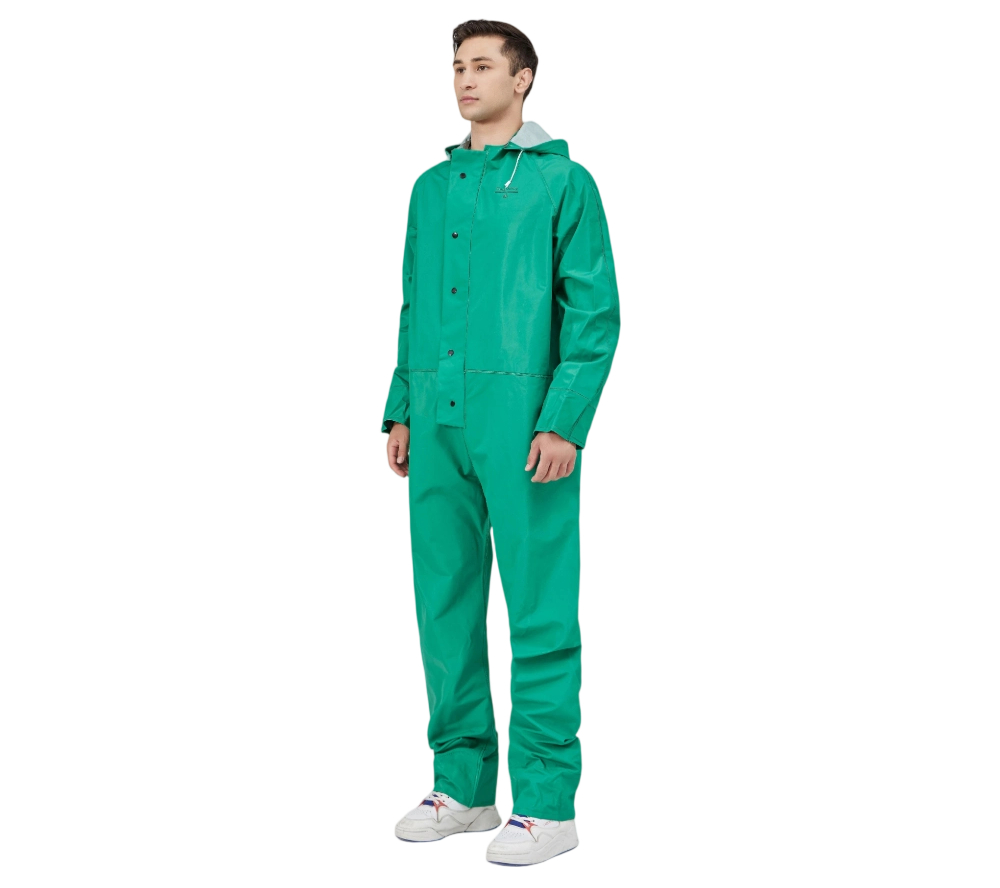
When you lean down to grab a tool, extend your arms, or lift up high, a normal rain jacket moves up your body. Rain flows right down your back and soon gets into the top of your pants. A one-piece rainsuit takes away this weak area fully. You have a steady, full cover from your neck to your feet. There is no space for water to get in, so your inner clothes stay dry all day long.
Retaining Body Heat in Freezing Storms
Getting wet is annoying, but getting cold is actually dangerous. By sealing the body inside a single garment, you trap your natural body heat far more effectively while keeping the freezing rain outside. This is exactly why professionals who spend eight or ten hours a day in harsh environments prefer this specific style. It acts like a wearable, personal shelter that moves effortlessly with your body without letting the cold drafts sneak inside.
Exploring Core Materials for Ultimate Waterproofing
The kind of fabric you select decides how long you remain dry and how fast the gear might wear out under pressure. You will find many materials on shop racks, from thin nylon to thick rubber. But for strong, steady protection, nothing matches the work of factory-made mixed fabrics, especially when makers blend various useful layers.
The Raw Power of a PVC Rain Suit
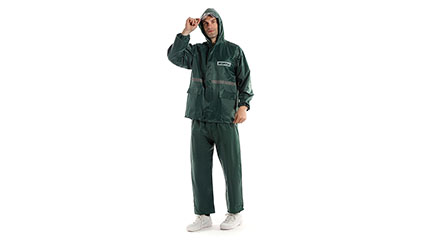
If you seek full, strong water block, a PVC rain suit often stands as the best pick. Polyvinyl chloride makes a thick, hard wall against wet. Water just forms drops and falls off the top quickly. Yet, pure PVC can feel somewhat hard in cool weather. That is why the best modern gear uses a smart combination strategy. For instance, applying a thick PVC coating over a strong 170T polyester base gives you the incredible tear resistance of woven fabric combined with the absolute waterproofing of traditional PVC.
The Importance of Fabric Weight and Thickness
A cheap jacket weighs almost nothing because it is literally paper-thin. A proper heavy duty raincoat feels substantial when you pick it up. For example, a quality industrial suit often uses a material thickness of around 0.30mm and can weigh up to 1075 grams. That specific weight means the fabric won’t whip around violently when the wind picks up. It hangs straight, blocking wind gusts and resisting punctures from stray nails, sharp branches, or rough concrete edges.
Specialized Gear for Riders and Industrial Workers
Different environments demand entirely different features. You cannot safely use the exact same flimsy gear for pouring a concrete foundation as you do for riding a bike down a busy highway. Let’s break down exactly what specific groups need to look for.
-
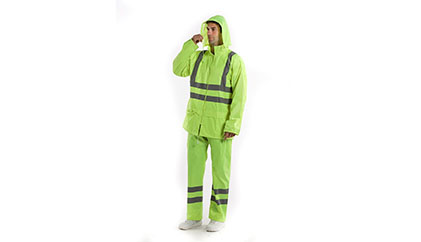
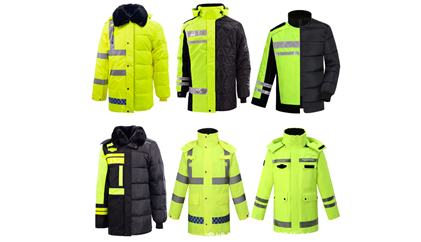
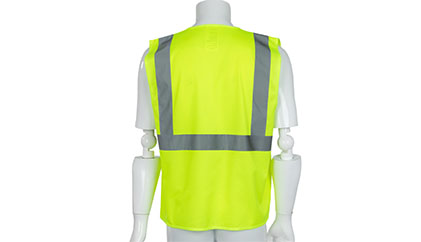
Protection for Riders: A motorcycle rain suit faces truly unique physical challenges. When you ride at highway speeds, standard raindrops hit your chest and arms like tiny, sharp needles. The suit needs double-flap covers snapping tightly over the zippers to stop wind-driven water from pushing directly through the metal teeth. High-visibility reflective stripes are also absolutely non-negotiable. Cars struggle to see anything in the dark gray haze of a heavy storm, so wearing bright colors with heavy reflectors keeps you alive.
-
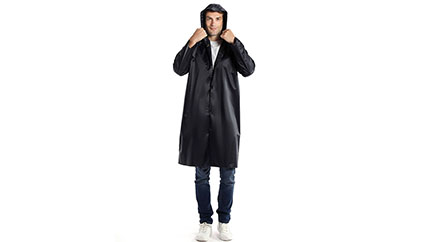
Durability for Job Sites: If you manage a construction crew or work in agriculture, you might lean heavily towards a long raincoat. A coat extending down past the knees is incredibly easy to throw on quickly over bulky work clothes, heavy boots, and loaded tool belts. It sheds water away from your core and down past your boots without restricting your walking stride. You can easily take it off in seconds when you finally step inside a dry trailer.
Construction Details You Should Never Ignore
The quality of the raw fabric is really only half the story. The specific way those fabric panels are put together tells you immediately if a waterproof raincoat will last ten years or just ten days. You have to look closely at the tiny details.
If the seams are just stitched together with regular cotton thread, water will eventually leak right through those tiny needle holes. Professional manufacturers solve this by using massive high-frequency sealing machines. This advanced process actually melts the fabric edges together, making the seam itself stronger and more watertight than the surrounding fabric.
Here is a quick breakdown showing what to look for when shopping for reliable rain gear:
| Feature | Cheap Consumer Alternatives | Professional Heavy Duty Gear |
| Seam Construction | Basic needle thread stitching (leaks over time) | High-frequency heat sealed (100% dry) |
| Front Closure | Exposed single zipper or cheap plastic buttons | Double-layer storm flaps with strong snaps |
| Sleeve Cuffs | Loose, wide open sleeves that let air in | Elastic inner cuffs to stop upward water flow |
| Expected Lifespan | Maybe one or two mild seasons | Years of tough, daily industrial abuse |
You also want to check the hood design. A good hood should have strong drawstrings to pull it tight around your face, preventing wind from blowing it back. Small details like automatic buckle closures and double needle machine reinforcement on stress points make a massive difference when you are miles away from dry shelter.
Tailoring Rain Gear to Your Brand and Business
For businesses, outfitting an entire crew or stocking retail shelves requires a different level of thinking. It goes far beyond just buying a waterproof raincoat off a random rack. You have to consider brand identity, specific regional weather patterns, and bulk sizing requirements. Working directly with a capable factory changes everything.
The Power of Customization and Private Labeling
When you get gear for workers, you want your business mark clear. A skilled provider can use your design and put lasting marks on a PVC rain suit without hurting the waterproof part of the fabric. If you need 1000 items in a certain yellow for work, or you aim to make a new motorcycle rain suit with special reflective shapes, an OEM helper does it. You decide the fabric heaviness, the edges, and the sizes from S to XXXL. Plus, this lets you match the gear to your team’s needs, so everyone feels comfortable and protected in their roles.
Quality Control at the Factory Level
Steady quality over many items does not come by chance. It takes close watch. Factories with special cutting areas and half-automatic build lines can spot problems before packing. They check the seals, look at the double-needle sewing, and measure the PVC thickness. When a company depends on a long raincoat to keep staff safe and follow rules, that kind of open making is very valuable. Moreover, good factories often run tests in real weather to make sure the gear holds up, which adds trust for buyers who need reliable items year after year.
Conclusion
Finding gear that genuinely protects you in harsh weather does not have to be a blind gamble. You just need to look for solid materials, high-frequency sealed seams, and smart designs tailored to your specific daily needs. Since 1992, Chenyuan has been writing a 30-year waterproof legend in the world’s commodity capital. We operate a massive 10,000-square-meter facility with 12 complete production lines, turning out over 4 million high-quality pieces annually. Our ISO9001-certified factory handles everything from advanced fabric cutting to precise logo printing. Whether you need a trusted OEM partner to develop a custom heavy duty raincoat or want to source highly durable gear for your team, our decades of strict quality control guarantee products that stand up to the worst storms. Ready to upgrade your weather protection? Contact us today to explore our professional collections.
FAQs
Q: Why choose a one-piece rainsuit over a two-piece set?
A: A one-piece rainsuit completely eliminates the waist gap, stopping heavy wind and driving rain from soaking your back.
Q: Does a motorcycle rain suit provide good wind protection?
A: Yes. A quality motorcycle rain suit uses heavy materials and sealed zippers to block high-speed cold winds entirely.
Q: How do I properly clean my PVC rain suit?
A: Simply wipe the PVC rain suit with a wet cloth. Avoid harsh washing machines to protect the waterproof coating.
 E-mail
 Whatsapp
 Leave Message
 top
top