

Cycling Rain Poncho: Coverage, Fit and Commuting Limits
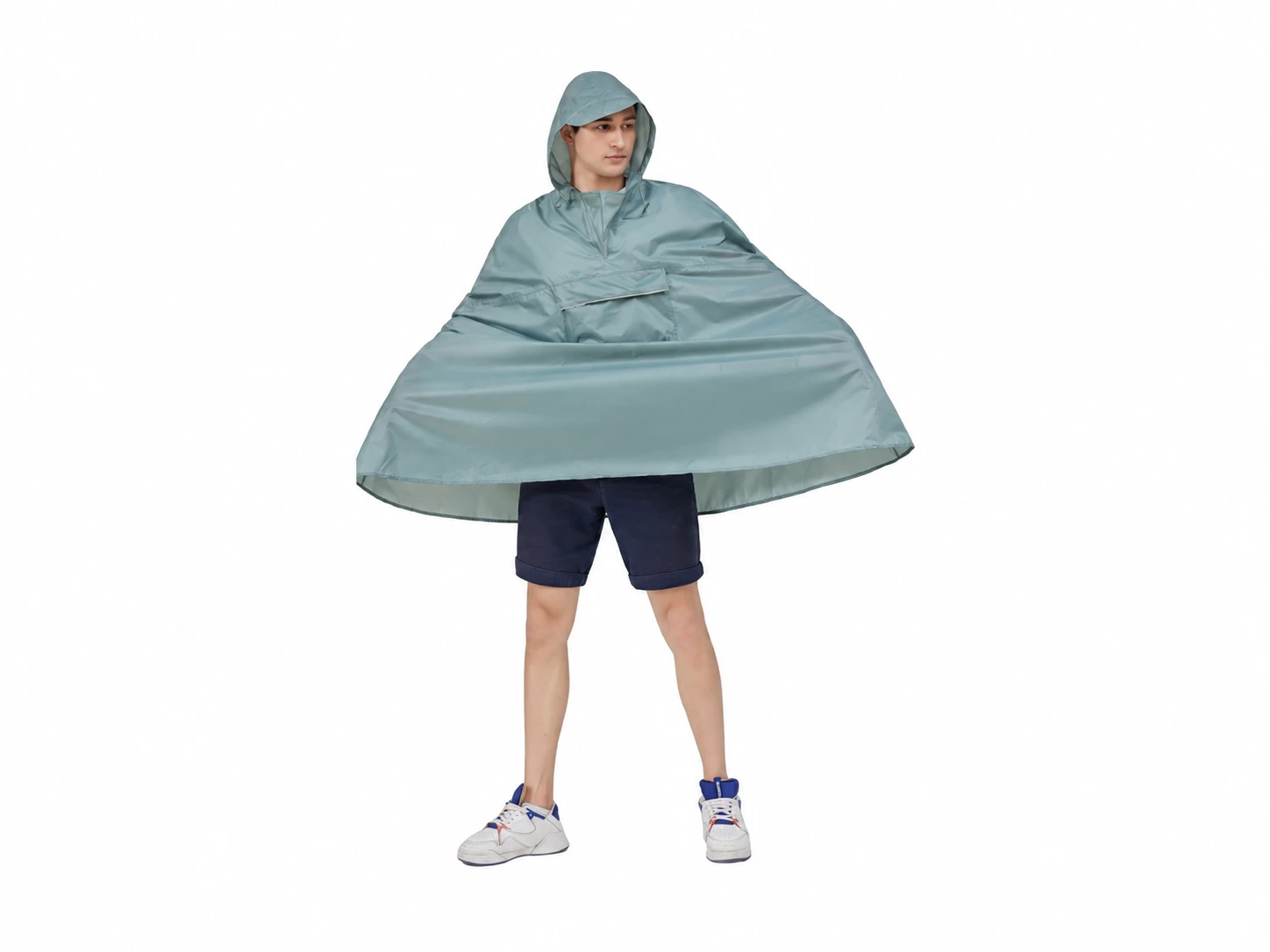
A cycling rain poncho goes over the clothes a commuter already wears. To choose a useful cut, bring the sample to a bicycle. Once the rider is sitting at the handlebars, the important questions become visible: where does the front fall, can both hands reach the brakes, and is any loose edge near a pedal or wheel? Coverage needs to leave steering and observation available, too.
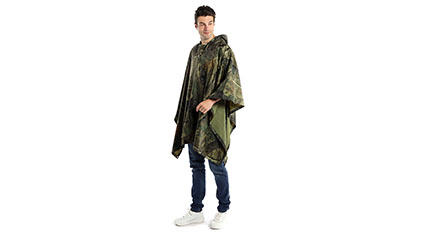
For a retailer, the sample therefore has two jobs. It needs to look right as a product and work on the sort of bicycle the customer rides. A photograph taken standing up is useful for judging appearance. For the other job, put the intended rider on the bicycle in the clothes they normally wear.
Define the Commute Before Choosing the Cut
Compare the sitting position on a town bike with the forward lean over low handlebars. The second rider reaches further forward, pulling the garment into a different position over the lap and sides. Add a backpack and there is less room left at the back of the garment. This is why a sample request benefits from details of the bicycle, layers and bag, even before measurements are discussed.
The route matters too. A short local ride with opportunities to stop is a different use from a fast journey across exposed roads. The local rider may find a suitable poncho after trying the fit. On exposed roads, the interaction of wind and loose cloth becomes a more pressing part of the control question. A short description of the route keeps that difference in the buying discussion.
Judge Coverage in the Riding Position
Reaching for the bars uses up fabric across the front. A sample that covered the thighs when the rider stood beside the bicycle may leave a different area exposed once they sit down. A longer front might help, but its edge will also be nearer the bicycle. Length is therefore something to assess through the change of position, rather than a reason to pick the biggest sample.
For the first fitting, keep the bicycle stationary and securely supported somewhere safe. Have someone observe the front and sides as the rider reaches forward and turns the handlebars, wearing the layers and bag planned for the commute. This establishes where the cloth sits. Waterproof performance needs its own evidence, and any riding assessment still needs controlled conditions.
|
Area to observe |
Useful fit outcome |
Reason to choose a different fit |
|
Front and lap |
Intended clothing stays covered while the controls remain accessible |
Reaching forward pulls the cover away or obstructs the controls |
|
Sides and back |
Fabric accommodates the normal position and planned bag |
The bag lifts the garment or creates an awkward pull |
|
Lower edge |
Fabric stays clear of wheels, chain and pedals |
Any edge can reach or catch a moving part |
Side rain and water thrown up from the road follow different paths from rain falling onto the shoulders. The lower legs and shoes remain outside the broad upper cover. A customer who also wants those areas protected needs to think about the rest of their rainwear. Selling the poncho as full-body protection would leave that part of the journey unexplained.
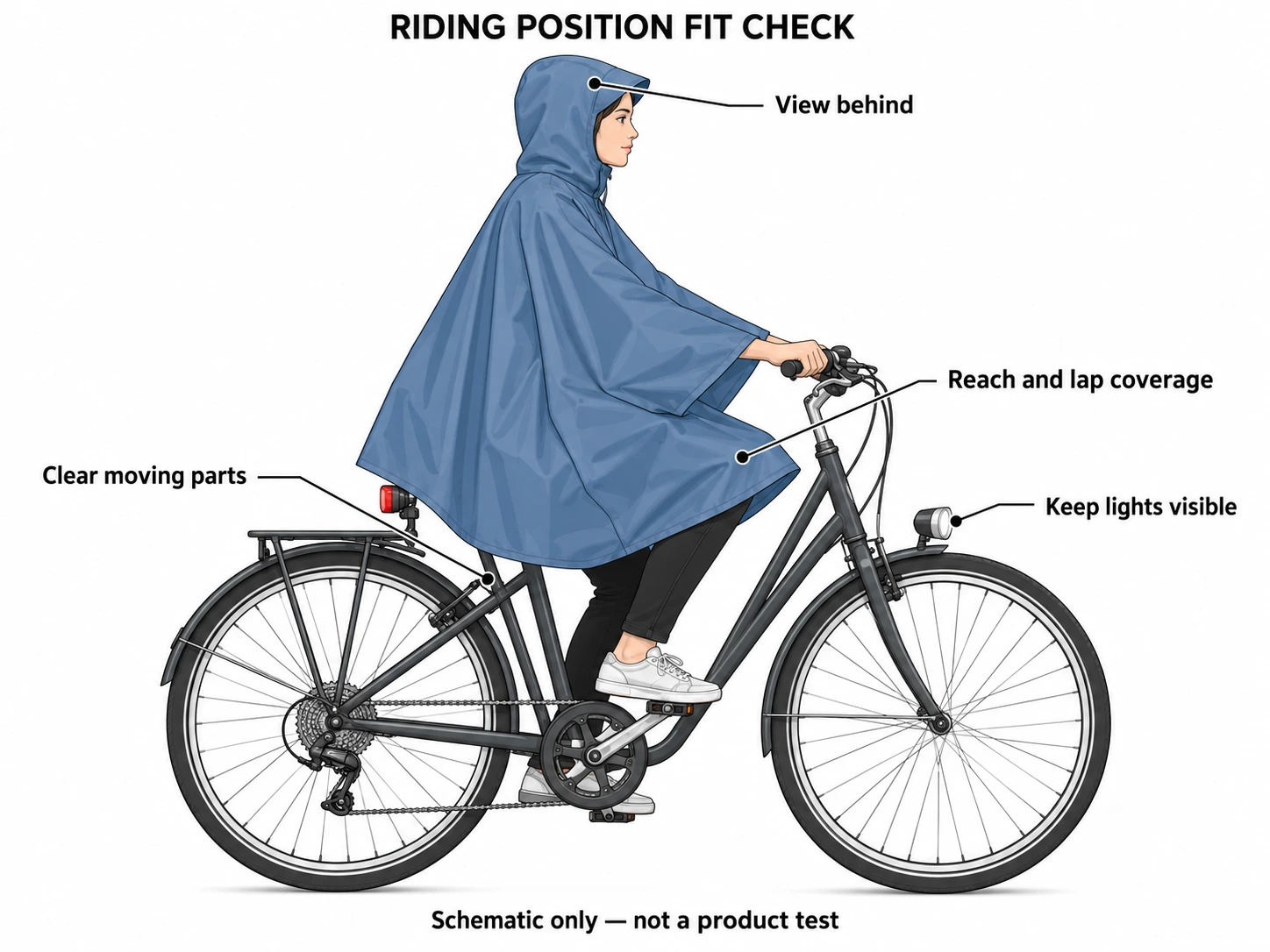
Hood, Hands and Hem Have to Work Together
Keep Observation and Hand Movement Available
Looking behind is a useful hood-fit check. As the head turns, the opening needs to move with it; otherwise the side of the hood can enter the rider’s view. Include the intended helmet in this check, in the arrangement permitted by the garment instructions. Pulling the hood tighter may keep it in place, yet still leave the original problem of a restricted view.
At the handlebars, watch what the hands have to do. Holding cloth down is an extra task the hands should not have while operating grips and brake levers. Where a design has a retention feature, establish what is supplied and how its instructions say to use it. When looking at a rain cape for cycling, do not infer hand loops or attachment points from a generic photograph.
Keep the Edges Clear Throughout Movement
Der Highway Code’s clothing guidance for cyclists advises against clothing that can become tangled in wheels or the chain, or obscure lights. Use that practical boundary when assessing the garment’s front, sides and rear. Take a second look at the lights once the rider is dressed. A lamp that was easy to see on the bare bicycle may now sit behind a fold of cloth.
Then consider getting on and off. Putting a foot down changes the rider’s position and can move a previously tidy hem. Include that transition in the sample evaluation; a photograph of someone sitting still will not show it.
Know Where the Commute Exceeds the Poncho
A still fitting leaves one obvious question open: what happens when wind moves the cloth? Coverage can shift, and a loose edge may become troublesome. Interference with control or visibility is a reason to stop safely and reconsider the clothing or the journey. A numerical wind limit would need evidence for the particular arrangement; there is no single figure to put on every poncho listing.
Water also has routes around a garment, not just through its material. Openings, construction and fit all belong in the assessment. A description such as 210T polyester with PU coating tells the buyer what construction is being offered. It says nothing, on its own, about how many hours the finished poncho has been tested in rain.
Longer exposure may call for a jacket, trousers and footwear protection in a different combination. The useful retail distinction is the area and conditions each arrangement covers. Explain those differences so the customer can choose for their route, rather than declaring one format the winner in every kind of rain.
Turn the Fit Requirements into a Product Enquiry
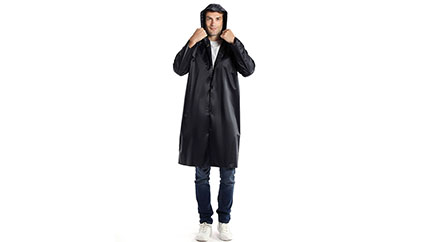
Chenyuans 210T polyester bike rain poncho with PU coating is an adult option with custom-logo availability. It offers a concrete sample to discuss within the rain poncho range, while the intended bicycle and rider determine the fit requirements.
Send Chenyuan the bicycle style, typical rider dimensions, clothing layers and backpack arrangement. A photograph of the intended riding position gives “large size” some meaning. Mark where coverage is wanted and show the controls, moving parts and lights that the cloth needs to clear.
Artwork and packaging details complete the request for a branded range. With the sample in hand, the buyer can settle dimensions, care information and the performance statements the evidence supports. Ready to discuss a cycling poncho sample with Chenyuan? Include those bicycle and commute details with the enquiry.
Schlussfolgerung
The handlebars reveal things a hanger cannot show about a cycling rain poncho. The commute provides the starting point; reach, view and hem clearance decide whether the sample fits it. A poor result points to a different fit or rainwear arrangement. Either way, the retailer has something concrete to explain to the customer about who the product suits.
FAQ (häufig gestellte Fragen)
Can a walking poncho double as a cycling rain poncho?
Only if its design and fit suit cycling. A comfortable walking fit leaves the bicycle questions unanswered. The manufacturer’s intended-use guidance and a fitting of the actual garment are needed before a retailer offers it for cycling.
Does a poncho replace bicycle lights in daytime rain?
No. The clothing may be conspicuous, but the bicycle still needs the lighting required where it is used. The lamps also need to remain visible. A bright poncho is no reason to leave one hidden behind fabric.
Can one sample represent every bicycle in a commuter scheme?
One fitting is a starting point. With a mixed fleet, identify the combinations likely to fit differently, including handlebar reach and backpack use. Trying representative riders on those bicycles is the next step. That gives the size offer a firmer basis than one successful fitting.
 E-Mail-Adresse
 von Whatsapp
 Nachricht hinterlassen
 oben