

Inhaltsverzeichnis
Verwandte Nachrichten
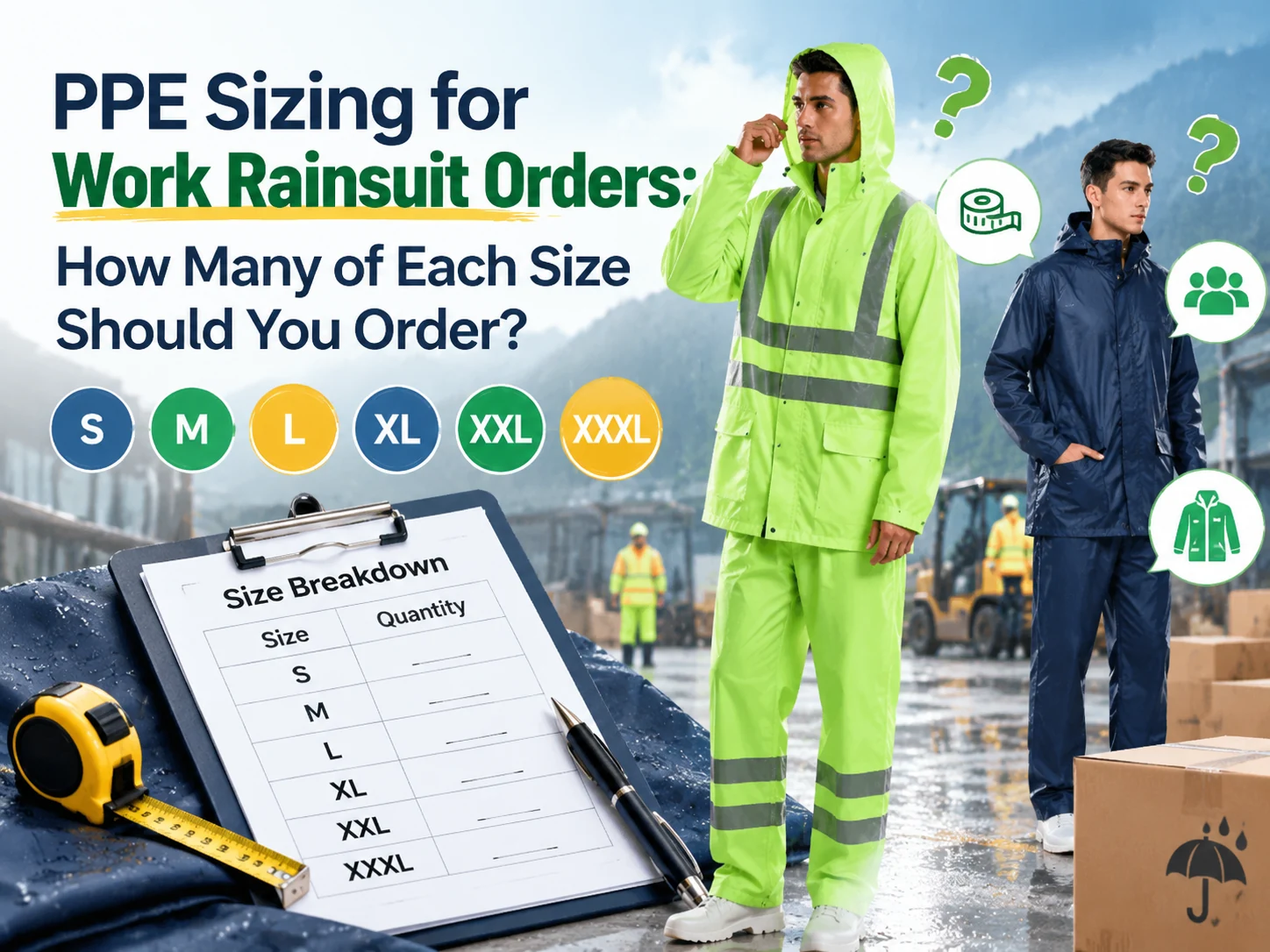

Raincoat Printing: What to Approve Before Bulk Production
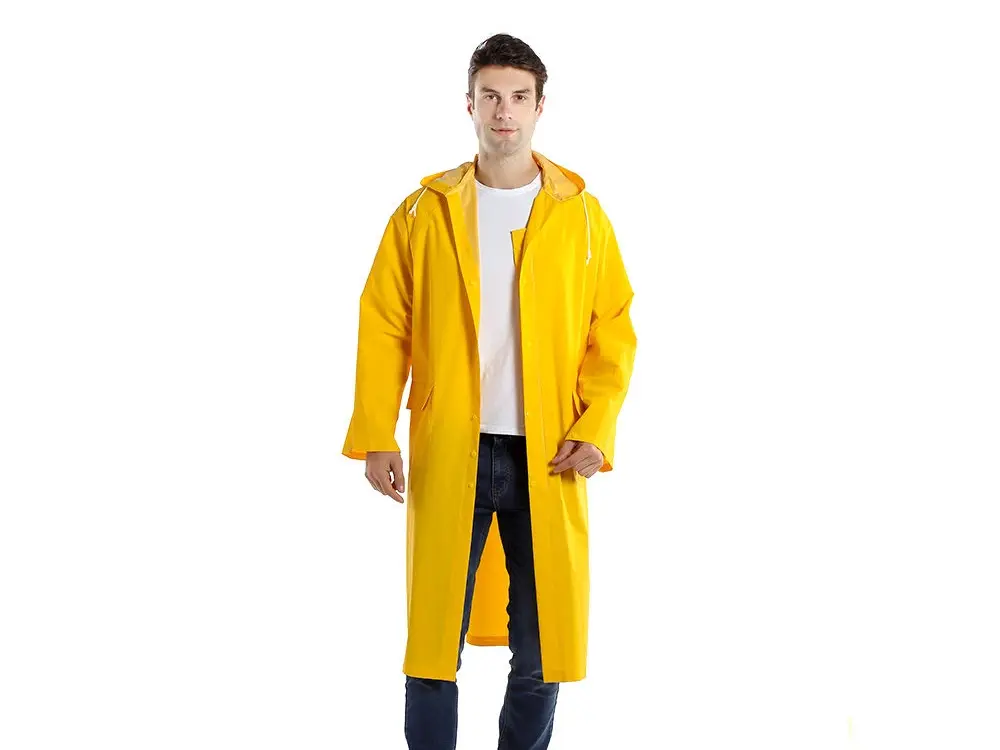
The sample looks good. Is it ready for a bulk order? With raincoat printing, that answer depends on more than the logo. The approval needs to cover the fabric used for production, the dimensions and position of the print, and its condition after the agreed handling and care checks. Keeping the accepted garment gives the factory a reference it can actually use.
For a uniform buyer or brand owner, this is where a digital proof stops being enough. It shows the intended layout, not the bond to the fabric or the feel of the decoration when the coat is folded. Screen printing and heat transfer are options to evaluate on a sample, not answers in themselves.
Confirm the Actual Coated Fabric Before Choosing a Method
“Polyester raincoat” is not a complete description of the surface being decorated. There may be layers, coatings and finishes that the short material name leaves out. The useful details for a print trial are the actual outer surface, the fabric reference and the colour intended for the order.
An offcut can serve that first trial, provided it is identified and represents the production material. A later change of coating, fabric or colour raises a new question: does the approval still apply? That is a reason to revisit the sample with the supplier, rather than quietly carry the earlier approval forward.
For heat-applied decoration, start with a transfer intended for the relevant substrate, such as polyester or nylon. That narrows the choice, but the decorator still needs to establish whether it works on the coating and finish of the raincoat being ordered.
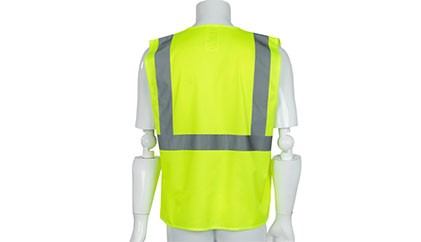
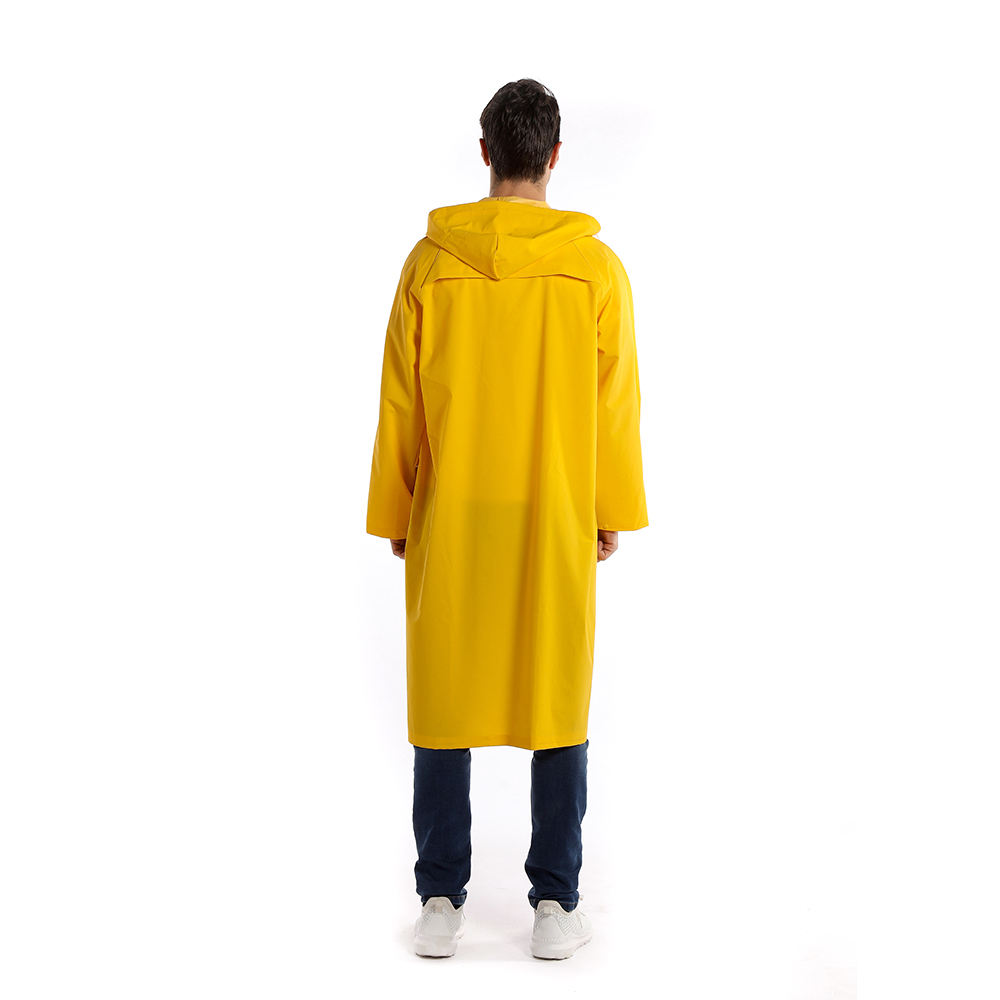
The available print area also depends on the cut of the coat. For long raincoats, a marked panel drawing can show the surrounding seams, pockets and flaps. It gives the factory something more precise to work from than “logo on the back.”
Compare Screen Printing and Heat Transfer by Sample, Not Assumption
With screen printing, ink passes through a screen onto the chosen surface. A heat transfer uses a prepared graphic and a compatible transfer system, applied with controlled heat and pressure. Neither process name is a guarantee of suitability.
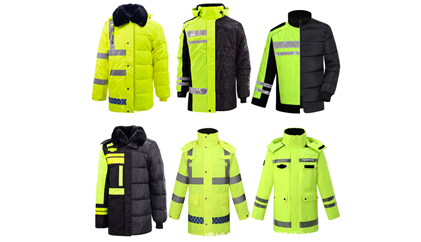
A useful proposal explains the choice in terms of your graphic and material: the surface, colour coverage and production arrangement. Chenyuan’s rainwear customization service includes material information and both printing methods. A sample request can take that discussion further by naming the fabric selected for the order.
Put the samples side by side and compare the following points:
|
Approval point |
Screen-printed sample |
Heat-transfer sample |
|
Material match |
Identify the ink system and actual print surface. |
Identify the transfer material and actual print surface. |
|
Appearance |
Examine colour coverage, edges and small details. |
Examine colour coverage, edges and the visible transfer finish. |
|
Garment response |
Check the printed area after the specified curing process. |
Check the printed area and surrounding fabric after pressing. |
|
Repeatability |
Record the accepted artwork and process reference. |
Record the accepted artwork, transfer and process reference. |
The factory’s technical record is the place for production settings. They belong to a particular material and process. Borrowing a temperature from a different transfer or machine would make the raincoat printing specification look precise without establishing that it is suitable.
Approve Artwork, Size, Colour and Placement
Editable artwork starts the exchange; a dimensioned proof settles what will be made. Along with the finished width and height, the proof needs a placement reference. The centre front or a named seam gives both parties the same starting point. “A little below the shoulder” does not.
For colour-sensitive orders, the physical colour reference matters as much as the file. The buyer and factory need an agreed way to compare it on the garment colour and under the same viewing conditions. A phone photograph is convenient for discussion. It is a weak sole reference when a close colour match is part of the approval.
Small lettering deserves a look at finished size. Thin lines and gaps can appear generous on an enlarged proof, so the physical sample is important here. There is a separate decision when one raincoat logo is used across a size range: whether its dimensions stay fixed, and where its position is measured on each garment size.
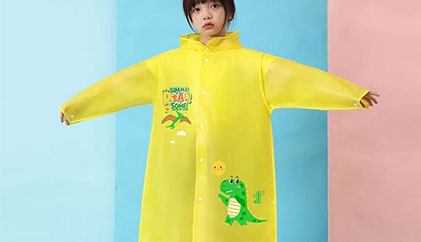
Chenyuans PVC/polyester hooded raincoat with custom logo printing is one product on which to discuss that layout. Its panel layout should guide placement, leaving the pockets, flaps and moving parts free to work.
Check Adhesion, Folding Appearance and Garment Function
The edges and small details give a useful starting view of the decorated sample. After the agreed handling and care checks, that view can be compared with the original condition. Record what changed: an edge lifting, a crack in the graphic, a colour shift or a mark beside the print. The acceptance criteria determine how those observations are handled. A durability claim still requires the agreed test.
The packing fold is another part of the sample review. Use the intended packing arrangement, reopen the coat and assess the appearance where a fold crosses the graphic. With printing on waterproof jackets, the nearby pocket, closure or vent also needs to remain usable. A flat front view cannot settle all of those questions.
Keep the care check consistent with the intended garment instructions and decoration specification. A wash temperature or cycle count taken from another transfer product tells you little about this sample. When the order needs a measurable durability claim, settle the test conditions and pass criteria first.
Keep an Approved Print Sample for Bulk Inspection
Keep the signed garment with its artwork version and fabric reference. Add the colour, print method, dimensions and placement to the same record, with photographs of the measurement points. An inspector should be able to repeat the measurements without having to reconstruct the approval conversation. The garment itself provides the physical comparison.
Before production, buyer and factory need to settle the tolerances and the response to a rejected print. The inspection record should distinguish a wrong graphic from poor coverage, a position error or a lifted edge. Shared terms help both parties apply the accepted reference to the problem in front of them.
On a repeat order, check whether the approved fabric and decoration are still being used. Assign approval responsibility for changes. To develop a sample with Chenyuan, send the artwork and raincoat specification with the intended use, print location and care requirements.
Schlussfolgerung
The finished sample is the reference for the order. Keep it together with the measurements and inspection criteria so the person checking bulk garments can make the same comparison. That is the reference worth keeping as raincoat printing moves into bulk production.
FAQ (häufig gestellte Fragen)
Can the same logo be printed on different raincoat materials?
The graphic can stay the same. Its production approval should identify the fabric it was tried on; a change of print surface calls for a compatibility check and a representative sample.
Is screen printing always better than heat transfer for raincoats?
No. The deciding evidence is the sample on your chosen fabric, including its appearance after the handling and care checks agreed for the order.
Is a digital mock-up enough to approve a bulk order?
A mock-up can settle the graphic and layout. Approval of the decoration on the fabric requires a physical sample that can also serve as the production reference.
What should buyers send for a printing sample?
The sample request needs the artwork, fabric or garment reference, print dimensions and position, colour reference, and care requirements. It should also identify any detail that must be signed off before production.
 E-Mail-Adresse
 von Whatsapp
 Nachricht hinterlassen
 oben