






Содержание
Связанные новости


Can a Raincoat Factory Repeat Your Order Without Drift?

The second purchase order often goes out as a copy of the first, with a new quantity, a new date and the same product code. Nobody re-opened the specification, because the product existed and the first run had shipped.
That is where repeat orders drift. Then a fabric lot arrived from a different mill. The coating landed lighter. The zipper came from another supplier. The logo sat off centre on the chest. Each change passes inspection on its own. Together they produce a second run that a distributor cannot sell next to the first.
The fix is a freeze list, a change notice and a batch record. Three documents, written once, that make run two match run one.
What Has to Be Frozen Before the Second Run
The Specification Sheet You Sign Off Once
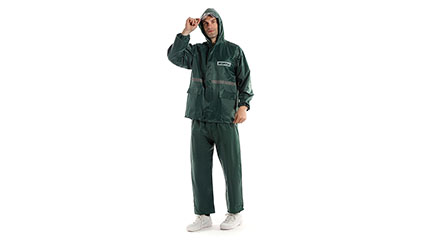
A rainsuit specification sheet covers the parts a shelf shopper notices and the parts nobody sees until a complaint arrives. On the industrial two-piece models it covered the polyester/PVC shell, the coating weight, the seam build, that model’s size range, the trims, the logo method, the print position and the packing count. PVC, polyester/PVC, PU coating, Oxford and EVA each behave differently, so the sheet names the material this order uses.
Chenyuan’s industrial safety two-piece runs S through XXXL and ships one set per bag, twenty sets per carton, at 1,000 sets as the minimum for that model per the industrial safety rainsuit page. The PU two-piece runs M to 3XL, so each repeat order gets checked against the sheet for its own model.

The Golden Sample Both Sides Keep
One approved unit stayed with the buyer, and one stayed at the plant. Each carried the approval date and the sheet number.
That pair settles arguments later, because each side compares the arriving run against the sample it kept.
The Documents That Travel With a Repeat Order
Four references travel in one place with a repeat order: the specification sheet, the golden sample number, the purchase order it came from, and the test documents for the material in that order.
For these programmes Chenyuan keeps a REACH Appendix XVII report covering cadmium, phthalates, PAHs and total fluorine, a fluorine-free print test report, and a GRS scope certificate in the test report records. Each one covers a defined material or process, so the reference line names the material the report belongs to. A report written for one shell fabric says nothing about the next order’s fabric.
What Changes Silently Between Runs
Fabric Lots and Coating Weight
Shell fabric arrives in lots, and lots differ. Coating weight is measured in grams per square metre, so a lighter lot shows up on the incoming material record before cutting starts. A new mill run can shift the hand of the shell and the coating grams per square metre, with the product code unchanged.
Ask for the lot number, the coating weight and the material inspection record before cutting starts, because that record is what the next order is checked against. Chenyuan’s process begins with an incoming material check for exactly this reason, and the record is the evidence that the run used the frozen specification.
Trims, Thread and Packaging
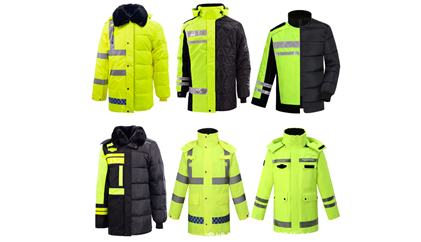
Trims and packaging moved without a drawing change, because a drawing rarely carries thread colour or tape grade. A different zipper pull. A new reflective tape supplier. A thread shade off by one step. A carton print sitting lower.
The order needs a change notice rule: substitutions of trim, thread, tape, carton or print get confirmed in writing before use, photograph attached. One clause stops a repeat-order complaint, the unit that matches at arm’s length and does not match on a shelf.
What Forces a New Sample
Not every repeat order needs a new sample. Some changes do.
A change to the shell fabric or its coating, the colour, the size range, the logo position or the packing earns a fresh approval before bulk. A second run that skips that approval fails inspection.
Chenyuan quotes seven to ten days for a sample on the rainsuit range.
Writing It Into the Repeat Order
The Change-Notice Clause
Three lines went into the purchase order. The specification sheet number. The golden sample number and date. A line saying that material, trim, thread or packaging substitutions get reported in writing before production and confirmed by the buyer.
That clause is what turns a late dispute into an early written notice.
Batch Records and the Checks Each Run Carries
Each run carried its own file. It opened with the incoming material check, then the in-process checks across cutting, sewing and assembly, a 100% appearance and function check on finished units, and AQL sampling before packing.
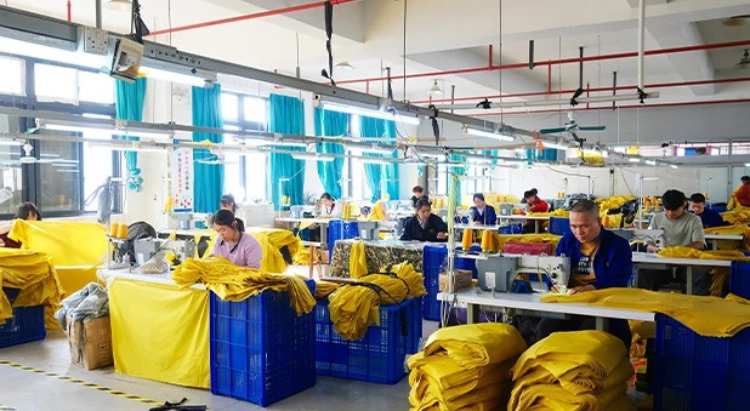
Ask for the file dated to that run. A file dated to the first order covers the first order, and when a distributor raises a claim six months later, that gap is what surfaces.
Arrival Re-Checks
Three checks catch most drift. Compare the fabric hand and coating against the golden sample. Compare the logo position and print against the approved photograph. Confirm the carton marks, the packing count and the size breakdown against the sheet.
Chenyuan runs contract and distributor programmes across workwear and rainsuits, as Chenyuan Raingear sets out. Name the specification sheet number on every repeat order, and give each line in a multi-line programme its own freeze list on the workwear range.
Вывод
Repeat-order consistency is decided on paper, before production starts. Freeze the specification. Keep an approved golden sample with the buyer and one at the plant. Require a written change notice for substitutions, and keep a batch record for every run. Run two matches run one once somebody wrote down what run one was, on paper and against an approved unit.
Часто задаваемые вопросы
Q1: Does a repeat raincoat order need a new sample?
A1: It depends on what moved. A new shell fabric, coating, colour, size range, logo method or packing configuration earns a fresh approval. An order that repeats the same specification against the same frozen sheet goes straight to production. Chenyuan quotes seven to ten days for a sample, so the choice is usually about scheduling.
Q2: What is a golden sample in rainwear manufacturing?
A2: One approved unit, signed and dated, held by the buyer and by the factory. Both sides compare against that unit during production and again on arrival, and in a later discussion it outranks a photograph.
Q3: How do I stop a factory substituting a zipper or a thread on a repeat order?
A3: Write a change notice clause into the purchase order. Material, trim, thread, tape and packaging substitutions get reported in writing before production, with a photograph, and confirmed by the buyer. A substitution then arrives as a message.
 Электронная почта
 в WhatsApp
 Оставить сообщение
 верхний