

2026 PPE Standards: Choosing the Right Rainwear for Contractors
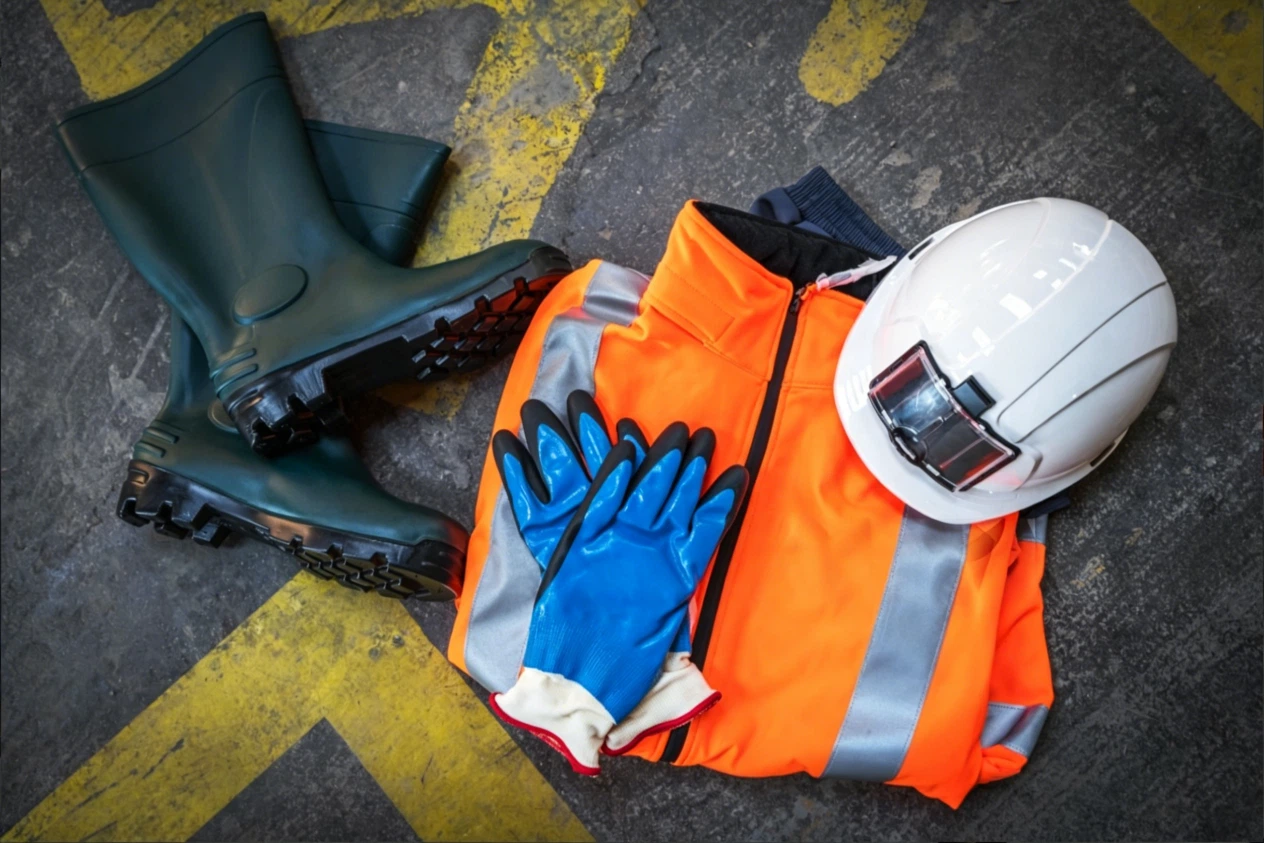
Recently, heavy atmospheric rivers and sudden flash floods have severely disrupted construction projects around the globe. You see videos online of massive building sites turning into deep mud pits in a matter of minutes. For the people actually doing the heavy lifting outside, this extreme weather is a serious daily threat. A basic cheap coat no longer cuts it. Because of these wild weather patterns and a rising number of site accidents, safety boards are aggressively updating their rules. They want workers protected by true industrial fabrics. Getting ahead of these upcoming regulations saves your company from massive fines and keeps your crew safe from the freezing rain. Dealing with the 2026 PPE Standards might feel overwhelming right now, but picking the right protective clothing is actually quite straightforward when you know exactly what details to look for.
The Shift Toward Stricter Job Site Rules
Safety inspectors are no longer accepting thin plastic covers as adequate weather protection. As heavy storms become a regular part of the building season, regulators demand highly durable and highly visible clothing for every person before they step onto a hazardous site. Let us examine the upcoming changes closely.
Why the New Safety Regulations Matter
The upcoming 2026 PPE Standards focus heavily on long-term durability and worker visibility. Last year alone, site accidents during heavy rainstorms jumped by nearly 22%, mostly because equipment operators could not see their ground crew through the downpour. The new rules specifically require gear that does not fall apart after one rough week. A cold, wet worker makes dangerous mistakes with power tools. If an inspector walks onto your site and sees people wearing ripped trash bags, your company will face massive financial penalties. Companies must provide real contractor safety rain gear that holds up to sharp metal, rough concrete, and continuous heavy washing. It is about stopping the cycle of buying garbage that puts people in physical danger.
Phasing Out Cheap Plastic Substitutes
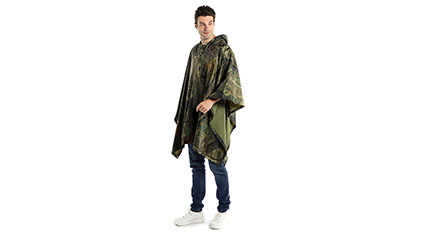
For years, many purchasing managers bought the absolute cheapest wholesale ponchos available to save a quick dollar. These flimsy covers rip the second they brush against a wooden pallet or a scaffolding pole. Once the coat tears, freezing water soaks into the worker’s inner layers, dropping their body temperature fast. This leads to sick days and abandoned shifts. Furthermore, throwing hundreds of torn plastic covers into the local landfill every single month is terrible for the environment. Regulators are looking closely at company waste. You will have to replace them with solid compliant rainwear that actually shields the human body from harsh outdoor elements across multiple building seasons.
Key Features of Modern Protective Clothing
You cannot just guess what works by looking at a picture online. Equipping a tough outdoor crew requires you to check specific construction methods and fabric labels. Certain physical features make a massive difference between a miserable, wet shift and a highly productive, comfortable workday.
When sourcing reliable industrial waterproof gear, you must demand these specific details from your supplier:
-
High-Frequency Sealed Seams: Traditional needle sewing punches thousands of tiny holes in the fabric. Heavy rain leaks right through those holes. Good factories use expensive high-frequency machines to melt and seal the seams completely, blocking 100% of the water from getting inside.
-
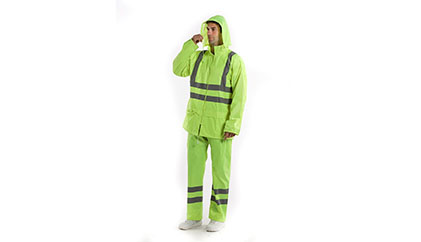
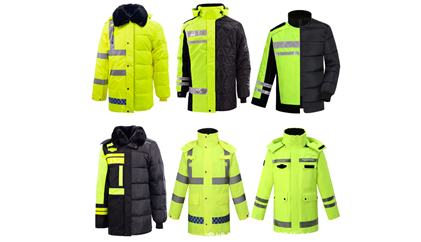
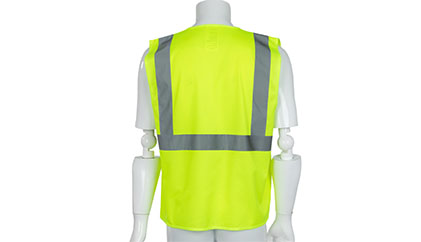
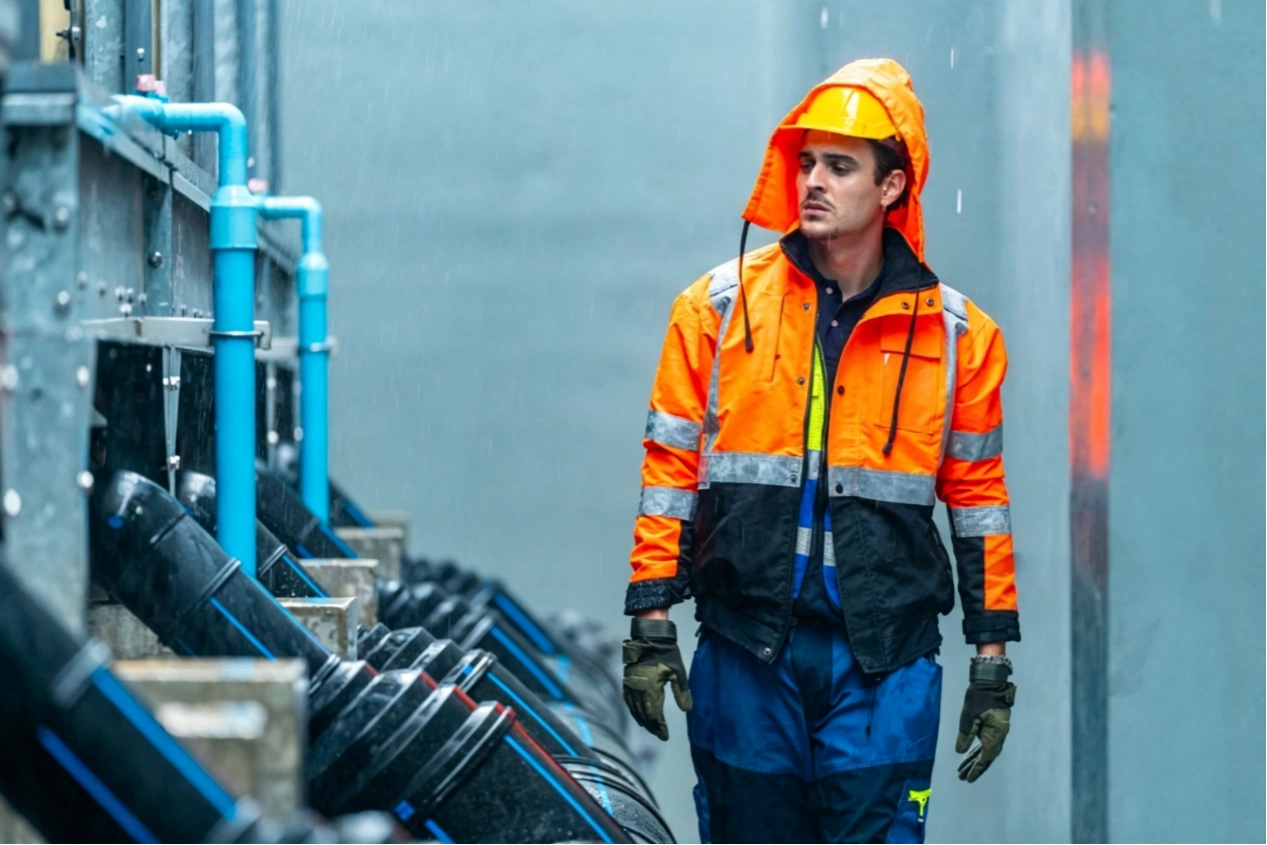
Reflective Safety Tape: Working late into the winter evening means low light and high danger. High visibility raincoats feature thick, bright reflective stripes on the chest, the back, and the arms. This makes the worker pop out against dark backgrounds, preventing terrible accidents with moving trucks and heavy loaders.
-
Reinforced Stress Points: Workers constantly bend, lift, and stretch. The armpits and pocket corners need double layers or special rivets so the coat does not blow out during heavy lifting.
-
Adjustable Storm Hoods: A good hood stays tightly on the head even when a strong 40 mph wind hits the job site. It fits smoothly over a standard hard hat without blocking the worker’s side vision.
Evaluating Fabric Toughness and Breathability
The raw material completely dictates how well a jacket handles a rough building environment. If the chosen fabric tears on a stray nail or suffocates the worker causing immediate heat exhaustion, it fails the basic job requirements. Let us compare the most common fabrics used today.
The Role of Heavy-Duty Materials
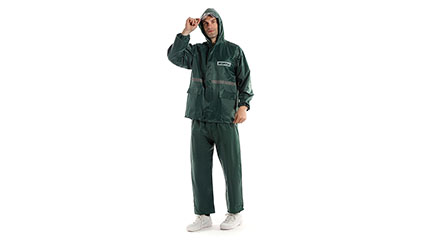
A solid piece of heavy-duty rainwear starts with an incredibly tough base. Top manufacturers often use a 170T woven polyester fabric backed with a thick 0.18 mm PVC inner coating. When a worker carries heavy lumber or rough metal pipes on their shoulder, a basic coat will shred instantly. The woven polyester outside acts like a strong net, stopping sharp twigs and rough tools from slicing the coat open. Meanwhile, the inner PVC layer acts as an invisible wall that stops water drops from soaking through to the skin. This hybrid approach gives you the ultimate physical shield against bad weather.
Balancing Comfort with Total Protection
Toughness is great, but comfort keeps the gear on the worker’s back. If a coat traps too much body heat, the worker will sweat heavily and eventually take the jacket off, completely breaking the site rules. Proper ppe rainwear for contractors allows a decent amount of airflow. A good design leaves enough room inside for the worker to wear a warm winter sweater without looking like a tight balloon. The material must bend naturally when the person walks or climbs a ladder. Stiff, freezing plastic makes it hard to bend the arms and slows the whole project down.
Let us look at a direct comparison of these fabrics on a busy outdoor site:
| Feature | Cheap Pure PVC | Premium Polyester/PVC Blend |
| Tear Resistance | Very low; rips easily on nails | High; woven polyester stops deep tears |
| Cold Weather | Becomes stiff and cracks | Stays soft and flexible all winter |
| Worker Comfort | Traps sweat and body heat | Moves well with the human body |
| Rule Compliance | Often fails safety inspections | Meets strict industrial standards |
| Overall Lifespan | Lasts a few weeks at most | Survives multiple harsh building seasons |
Finding the Right Manufacturing Partner
Knowing exactly what to buy is only half the battle. You also need a reliable factory partner that actually delivers what they promise every single time. Buying from a random middleman often leads to receiving mixed batches of poorly made gear that falls apart.
The Importance of Factory Certifications
When dealing with safety gear, you cannot rely on a supplier’s verbal promise. You have to look at their official paperwork. A manufacturer holding an ISO 9001 quality management certification proves they follow strict, repeatable steps to build their garments. They test the zippers, check the button strength, and measure the exact thickness of the PVC coating. This level of professional quality control means every single jacket you hand to your crew will perform exactly as expected in the pouring rain.
Capacity and Customization for Large Crews
Big construction firms need thousands of jackets at once, and they want their company logo printed clearly on the back. A small workshop simply cannot handle that volume. You need a massive factory that runs complete production lines. Your crew might need special radio pockets or tool loops added to the chest. Having a direct relationship with a high-capacity builder means you never have to delay a project. They can customize the colors to match your brand, modify the pockets, and ship large containers directly to your main warehouse on a strict schedule.
Conclusion
Preparing for stricter job site rules does not have to be a painful process. By providing your crew with high-quality, visible, and tough clothing, you boost their daily morale and keep your company fully compliant. To get this right, you need a manufacturer with a proven track record. Since 1992, Chenyuan has been writing a true waterproofing legend. Operating from a 10,000-square-meter facility in Yiwu, their 200 skilled employees run 12 complete production lines to deliver 4 million premium garments annually. Backed by strict ISO9001 certification and advanced high-frequency sealing equipment, Chenyuan produces everything from standard PVC ponchos to custom OEM heavy-duty workwear. We can provide exactly what your crew needs to stay safe in harsh weather. Contact us today to secure the best protective gear for your next big project.
FAQs
Q: How do 2026 PPE Standards affect my job site?
A: The 2026 PPE Standards require companies to provide highly durable and visible clothing to prevent accidents during severe weather.
Q: What is the best PPErainwear for contractors?
A: A premium polyester and PVC blend offers the best tear resistance and waterproofing for active outdoor workers.
Q: Why should we buy compliant rainwear in bulk?
A: Buying compliant rainwear in bulk from a certified factory saves money and keeps your entire crew legally protected.
 E-mail
 Whatsapp
 Leave Message
 top
top