


Table of Contents
Related news

Fully Taped Seams: What Rainwear Buyers Should Verify
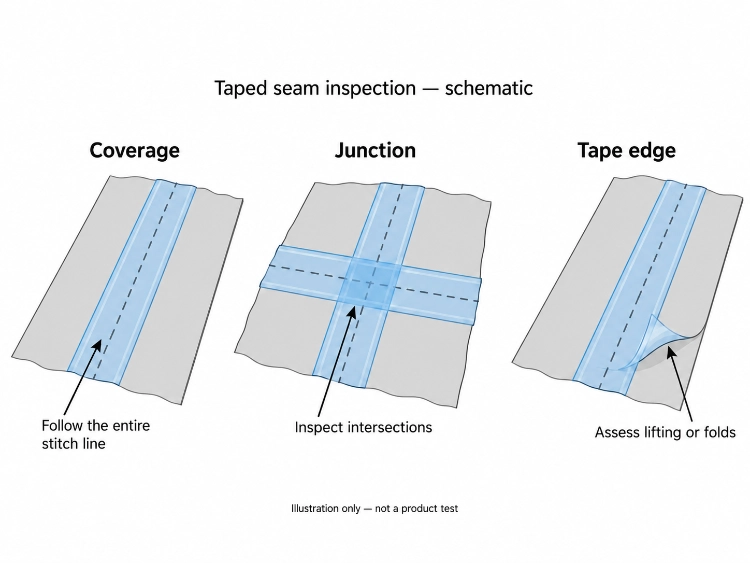
All sewn seams should be covered with sealing tape when a rainwear specification says fully taped seams. Taping only selected joins is a different construction. The sample should let buyer and factory verify that coverage and settle the production inspection requirements. A whole-garment waterproof rating requires its own basis; it cannot be read from the seam description.
Where does each seam run, and what seals it? A supplier’s explanation is easier to use when it is accompanied by a seam map and an accessible sample. Buyer and factory can then point to the same join instead of relying on their interpretation of a short product description.
Distinguish Fully Taped, Critically Taped and Welded Seams
A sewn join has needle holes. Seam tape covers the join to help seal those openings.
The terminology matters when you compare specifications:
|
Construction term |
Construction to verify |
Limits of the description |
|
Fully taped seams |
Tape covers every sewn seam. The seam map and sample should show that complete coverage. |
Whole-garment waterproof performance and the workmanship of bulk garments still require separate assessment. |
|
Critically taped seams |
Tape is applied to selected joins. The specification needs to name those locations. |
Coverage is partial; the condition of the remaining seams needs to be identified separately. |
|
Welded seams |
A welding process joins compatible material layers. Record the process and the joins where it is used. |
Any use of tape, and the construction of other joins, must be specified separately. |
The broader phrase “sealed seams” leaves the method open. Where a style combines methods, the order needs to show where each is used. A range-wide description cannot supply that detail.
Specify Seam Construction Against the Actual Fabric
Tape selection begins at the surface it will bond to. The supplier needs the fabric construction and coating details to propose an appropriate tape and application process. Tape characteristics differ, and bonding conditions depend on the fabric, machine and application. The process therefore needs to be established for the rainsuit being ordered, rather than copied from a different material or machine.
A repeat style can look unchanged even when its coating is different. Keep the material and construction references with the approved sample, and agree which changes require another review. The replacement can then be reviewed against a known sample, rather than treated as an unchanged repeat order.
For example, the CY106 PU rainsuit from Chenyuan pairs a hooded jacket with trousers and uses sealed welded seams. Its sample review should therefore include representative welded joins and the treatment at intersections. Selection from the rainsuit range is the beginning of that discussion; the seam requirements belong to the model being ordered.
Inspect Coverage, Junctions and Tape Edges on the Sample
The seam map gives the inspection a route: hood and shoulders, sleeves, body, then the trousers if supplied. It also helps identify seams that a lining conceals. Access to those joins, or an agreed way of documenting their construction, belongs in the sample-approval arrangements. Construction photographs may form part of that arrangement.
Along each tape strip, the points to record are exposed stitching, interrupted coverage, lifted edges and folds. At a junction, tracing every incoming seam avoids examining only the most visible strip. A location photograph helps the factory return to the same questionable spot for assessment.
A smooth appearance cannot replace the agreed performance test. A wrinkle is a finding to assess on the join, not a water-resistance result. Recording the observation separately preserves that distinction.
There may be no tape to inspect on a welded join. The comparison is with the accepted welded construction, including its intersections. That accepted sample is the place to establish the welded appearance being approved.
Separate Seam Performance From Closures and Whole-Garment Performance
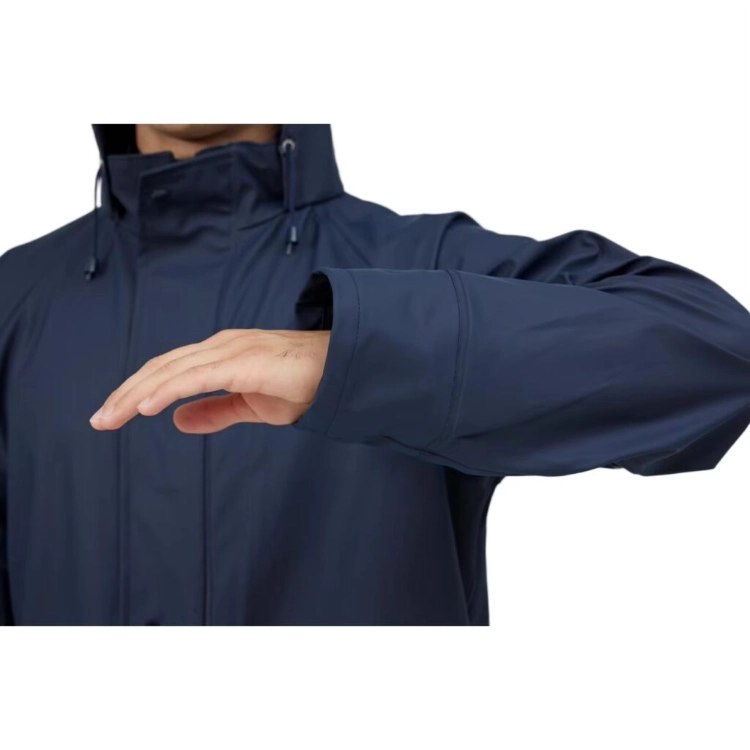
The inspection cannot stop at the joins. The front closure, hood, cuffs, pockets and vents deserve a separate look for possible water entry. These openings have their own design requirements for the intended use, regardless of the quality of the seam work.
A test record needs to make its subject clear: was it the fabric, a seam or the assembled garment? When an order includes a tested waterproof claim, the record should say which was evaluated. The sample identity, method, conditions and result give the buyer the context needed to understand it.
For rainwear for outdoor work, expected exposure, movement and care provide the basis for choosing relevant checks. The supplier needs that use information. It turns a broad requirement for “waterproof seams” into a discussion about the garment and the conditions that matter to the buyer.
Define Sample Approval and Bulk Inspection Requirements
A short seam inspection sheet can be sufficient. Its purpose is to give the factory and inspector the same instructions. The decisions to record before production are:
- The seams that require tape, welding or another sealing method.
- The material and construction sample used as the approved reference.
- The visible conditions that require correction or further assessment.
- The performance test, sampling arrangement and acceptance criteria.
- The person responsible for approving a material or process change.
The approved sample and seam map need to be available to the inspector. Photographs and test records should also identify the style and sample version. When there is a problem, “seam issue” is too broad to guide a correction. The factory needs the location and the construction involved.
Chenyuan’s rainwear production and customization information provides a starting point for discussing sewing and sealing. For the selected style, send the intended use and seam requirements so the sample discussion can cover the construction and the checks required for bulk approval.
Conclusion
The phrase fully taped seams is a description to verify, not the whole purchase specification. The order needs the material reference, seam map and accepted construction sample, together with the inspection requirements. Use the appropriate reference for welded joins and include the closures in the garment assessment.
FAQ
Are sealed seams always fully taped seams?
No. “Sealed” could refer to tape, welding or another arrangement. The specification still needs to say which process is used and which joins receive it.
Does fully taped mean the entire garment is waterproof?
It describes seam coverage. Fabric, openings, design and workmanship remain part of the finished garment’s performance. The applicable test evidence must support the scope of the claim.
What does critically taped mean for an order?
Selected seams receive tape. A list or map of the selected seams lets the buyer compare that coverage with the intended use.
Can a buyer verify seam quality from photographs alone?
Photos document where the tape runs and the workmanship visible at that location. They cannot measure the bond or the resistance to water. Approval still needs the sample and agreed checks. When access would damage the garment, a separate inspection sample or another access arrangement should be agreed before production.
 E-mail
 Whatsapp
 Leave Message
 top