


Table of Contents
Related news
What Should Buyers Verify in Heavy Duty Rain Suits for Work?
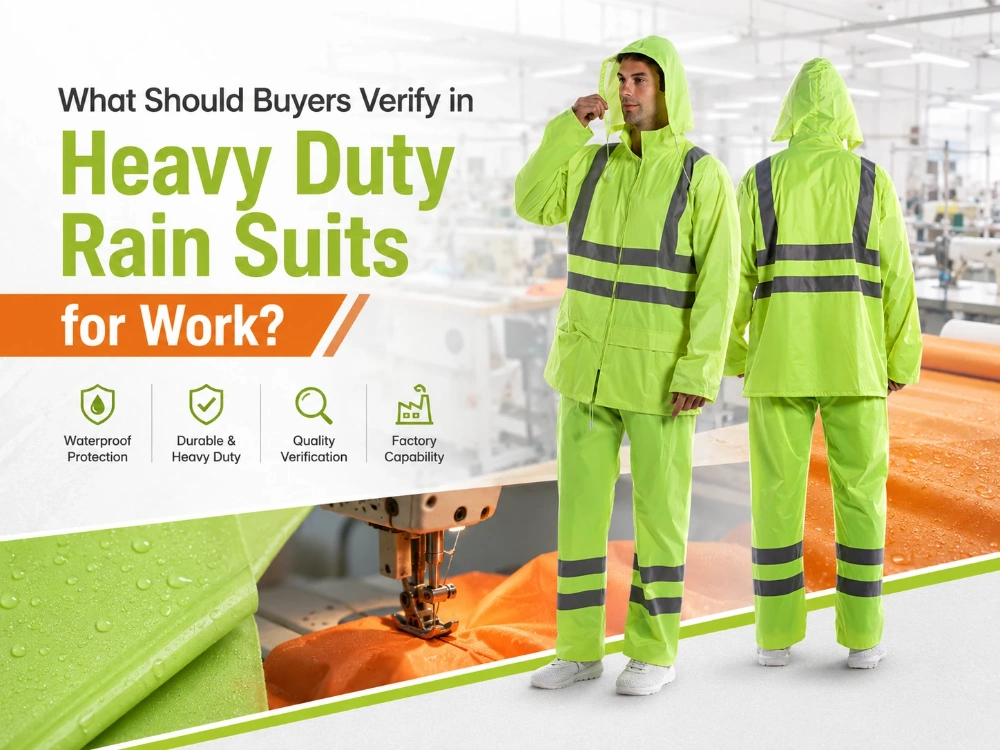
Buyers should look beyond thickness when sourcing heavy duty rain suits. A strong workwear order connects the job environment with garment construction, material choice, sample approval, compliance needs, and bulk-production control.
This matters for heavy duty rain suits for work used by construction crews, sanitation teams, road workers, maintenance staff, and logistics operations. These workers may bend, kneel, climb, move between vehicles, or stay outside through long periods of rain. Their waterproof workwear has to fit those working conditions rather than simply look substantial in a catalog.
A useful buying process starts with the job itself. Once the exposure and movement are clear, it becomes much easier to compare materials, samples, supporting documents, and suppliers.
What Makes Heavy Duty Rain Suits Suitable for the Actual Job?
“Heavy duty” can describe several different rainwear constructions. One buyer may need more protection around the knees and lower legs. Another may care more about easy movement, repeated cleaning, or room for clothing underneath.
Construction rain gear and industrial rain gear should therefore be selected around daily use rather than one fixed fabric specification.
Where Will the Suit Take the Most Wear?
Construction workers often put extra stress on the knees, seat, shoulders, cuffs, and trouser hems. Bending, lifting, carrying tools, and contact with equipment all affect how a rainsuit performs through repeated use.
For yard workers or maintenance teams, other details may matter more. Workers may repeatedly enter vehicles, use pockets throughout the day, or move between sheltered and exposed areas. Closures, hood adjustment, layering room, and freedom of movement can be just as important as the outer fabric.
Chenyuan Raingear’s workplace rainwear solutions cover construction, road work, sanitation, and other outdoor occupations. This gives buyers a practical starting point for matching garment construction to a real work environment.
Does the Garment Format Match Worker Movement?
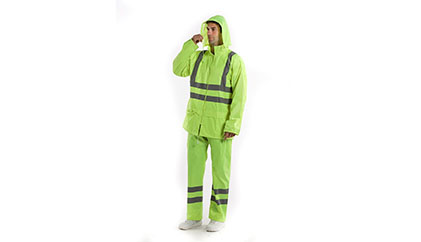
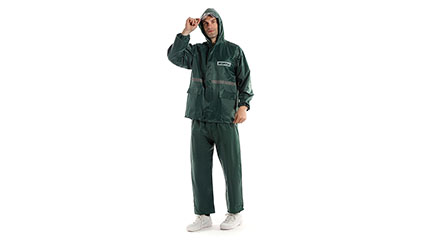
A two-piece jacket-and-trouser set gives lower-body coverage and works well where employees bend, kneel, walk through wet areas, or remain outdoors for longer periods.
Chenyuan Raingear’s industrial raincoat with pants is one practical example. Model DW08 uses polyester/PVC, comes in S through XXXL, has a listed thickness of 0.18 mm, supports customized logos, and normally has a 7–10 day sample period.
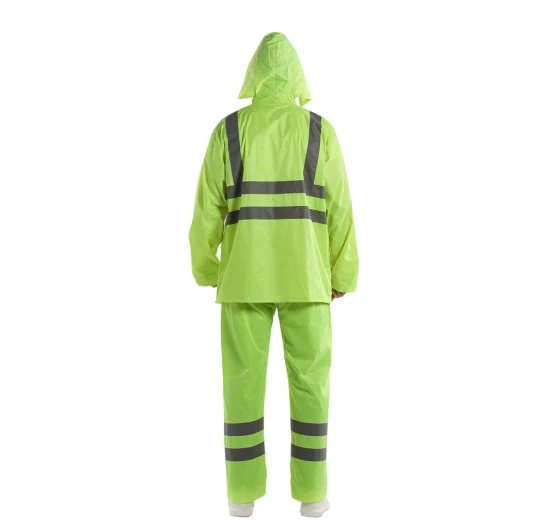
For buyers looking for a more structured option, CY066 uses 150D Oxford fabric with PVC coating, has a listed thickness of 0.20 mm, and includes reflective detailing.
These choices allow heavy duty rain suits to be matched to different work conditions rather than treating every job as the same order.
Which Construction Details Deserve Attention During Sample Approval?
The approved sample is one of the most useful tools in a workwear order. It gives the buyer and factory a shared reference for fabric, sizing, trims, workmanship, and finishing.
For heavy duty rain suits for work, sample review should focus on the parts that experience the most movement and exposure.
How Should Seams, Closures, and Openings Be Checked?
Start with the shoulder seams, hood attachment, crotch, inside legs, cuffs, ankles, pockets, and front opening.
If the garment uses sealing, look for consistent finishing through the sealed areas. Open and close the zipper or snaps several times. Put the hood up. Reach forward. Sit down. Bend at the knees.
These movements show how the garment behaves during actual work rather than only how it looks on a hanger.
Chenyuan Raingear handles raincoat and rainsuit production through purchasing, cutting, sewing, sealing, assembly, inspection, and packing. That manufacturing structure supports clear checkpoints from material preparation to the finished garment.
Is the Fit Checked Over Real Workwear?
Waterproof workwear is often worn over a uniform, fleece, sweatshirt, or other protective clothing. That changes the amount of room workers need.
Shoulder reach, sleeve length, chest room, trouser rise, hood movement, and ankle openings are worth checking while the wearer has normal work clothing underneath.
This is particularly useful for construction rain gear. A suit may feel comfortable while the wearer stands still but behave differently when crouching, climbing, or reaching overhead.
Once the fit is approved, the size chart and sample comments can become part of the production specification.
How Can Material Compliance Strengthen a Workwear Order?
Professional workwear buyers increasingly need more than a fabric name on a quotation. Material composition, restricted-substance requirements, and customer-specific chemical policies may all become part of the order.
The exact checks depend on the product, material, destination market, and buyer requirement. For EU-oriented programs, REACH Annex XVII is one important reference for restricted substances in articles and materials.
Chenyuan Raingear can support this part of the sourcing process with material-compliance data for selected rainsuit programs. CY107 and DW02 have achieved PASS results in specified checks covering cadmium, phthalates and PAHs, together with total fluorine screening.
This gives buyers useful technical information when building material requirements for industrial rain gear and other professional rainwear orders.
Why Should Buyers Think Beyond the Main Fabric?
A rainsuit includes more than the outer shell. Zipper components, metal hardware, trims, coatings, prints, and other parts can all become relevant when a buyer sets chemical or material requirements.
A practical specification should therefore record the main components at sample stage.
| Item | What to record |
| Main fabric | Base fabric, coating and color |
| Zipper | Teeth and slider material |
| Trims | Snaps, drawcords, reflective details |
| Printing | Ink, logo method or printed fabric |
| Compliance | Buyer-required substance checks |
| Sample | Approved component combination |
Chenyuan Raingear can align these component details with the approved sample and bulk specification, making the technical file easier to manage through development and production.
This is especially useful for waterproof workwear sold to distributors, contractors, or institutional customers that have their own material-compliance requirements.
Where Can PFAS Screening Fit Into Material Selection?
PFAS has become an additional material consideration for some apparel and textile programs. Buyers may request screening for particular fabrics, coatings, or treatments depending on their own market and chemical-management policy.
For projects where this is relevant, Chenyuan Raingear has access to fabric options supported by PFAS screening. A 210T polyester taffeta printed fabric has been assessed using EN 17681-1:2025, with the listed PFAS substances reported below their stated detection limits.
This type of material information can be useful for customized rainwear, particularly when a buyer wants chemical requirements defined before sampling.
The best approach is to include those requirements in the material specification at the beginning of the project. That allows fabric selection, color, printing, coating, and supporting documentation to be planned together.
How Can GRS Support Recycled Industrial Rain Gear Programs?
Recycled-content requirements are becoming more common in private-label and corporate workwear programs. For buyers developing this type of industrial rain gear, certification scope and traceability can be planned alongside product design.
Chenyuan Raingear’s current TÜV Rheinland GRS V4.0 scope covers both Rainsuits and Raincoats. The covered product scope includes recycled post-consumer polyester combined with PVC, with manufacturing included in the certified process category.
The scope certificate is valid until July 20, 2027.
This gives buyers a clear foundation for developing recycled-content heavy duty rain suits through Chenyuan Raingear.
What Should Buyers Confirm at the Product-Development Stage?
The first step is to align the planned rainsuit with the relevant certified material route.
For example, buyers can discuss:
-
recycled post-consumer polyester requirements;
-
PVC construction;
-
raincoat or rainsuit format;
-
logo and label needs;
-
color and size range;
-
packaging;
-
GRS documentation required for the order.
Chenyuan Raingear’s certified scope already includes Raincoats and Rainsuits, allowing these points to be considered during product development instead of being added after the sample is finished.
How Can Traceability Follow the Order?
For certified recycled programs, production records and transaction documentation help connect materials with the finished order.
Chenyuan Raingear’s GRS management process covers incoming transaction documentation, recycled-material stock records, production batch records, certified-product inventory, supplier records, and volume reconciliation.
For specific certified shipments, Transaction Certificate requirements can also be planned as part of the order documentation.
This creates a clear route from material sourcing through production and shipment, which is especially useful for buyers that need reliable recycled-content records for their own customers or sustainability programs.
How Can Buyers Keep the Approved Sample Consistent Through Bulk Production?
A well-approved sample becomes the working reference for bulk production. The more clearly its details are recorded, the easier it is for both sides to work toward the same result.
Before production begins, record the important points in one approval sheet.
| Checkpoint | Details to record |
| Fabric | Base fabric, coating, color, thickness or weight where specified |
| Construction | Seams, sealing, hood, cuffs, waist, closures |
| Trims | Zippers, snaps, reflective details, drawcords, labels |
| Fit | Size chart and layering allowance |
| Compliance | Material requirements and supporting information |
| GRS | Certified material and documentation needs |
| Branding | Logo type, size, position, labels |
| Packaging | Unit pack, carton quantity, shipping marks |
| Approval | Final reference sample |
Buyers looking for a more structured two-piece option can review the CY066 Oxford rainsuit. It uses 150D Oxford fabric with PVC coating, has a listed thickness of 0.20 mm, supports custom logos, and normally has a 7–10 day sample period.
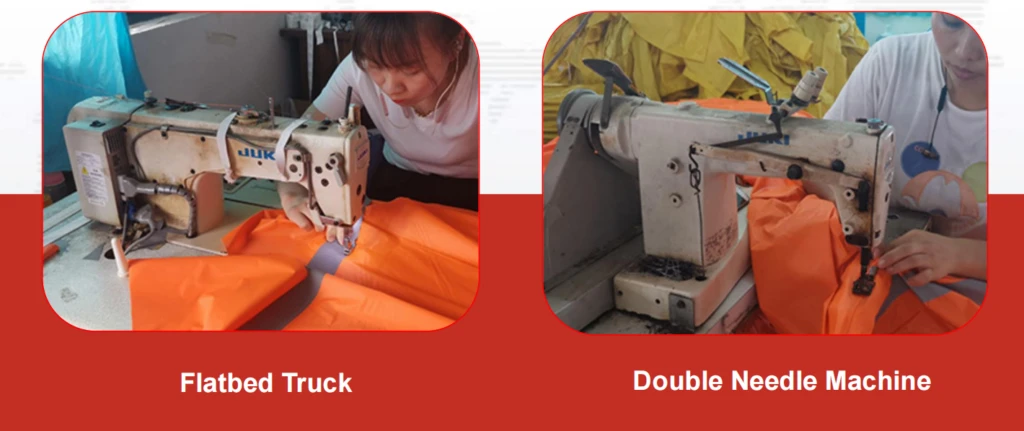
Chenyuan Raingear also supports OEM customization for style, fabric, logo, labels, tags, packaging, and other order details. Rain suit production capacity is approximately 100,000 pieces per month, supported by equipment such as sealing machines, double-needle machines, automatic buttoning machines, and high-frequency machines.
That combination of product development, manufacturing control, material-compliance support, and recycled-content capability gives buyers practical tools for building heavy duty rain suits for work from sample approval through bulk production.
Once the job requirements are clear, buyers can discuss a rainwear project with Chenyuan Raingear and align garment format, fabric, sizing, branding, compliance needs, recycled-content requirements, and production details before sampling.
Conclusion
Heavy duty rain suits are easier to source when “heavy duty” is turned into a clear working specification. Start with the employee’s environment, identify the parts of the garment that face the most stress, check fit over normal work clothing, and use the approved sample as the reference for production.
For professional heavy duty rain suits for work, material-compliance information and certified recycled-content options can add useful depth to the purchasing process. Chenyuan Raingear combines workwear-oriented raincoat and rainsuit production with material testing support, GRS-certified Raincoat and Rainsuit scope, OEM customization, and structured production control.
That gives buyers a practical route for developing construction rain gear, industrial rain gear, and waterproof workwear around real job requirements rather than a generic product label.
FAQs
Q1: What should buyers check first when sourcing heavy duty rain suits?
A1: Start with the work environment and worker movement. Then check fabric, seams, closures, fit, material requirements, and the approved sample. Heavy duty rain suits perform best when the specification reflects how workers will actually use them.
Q2: What makes heavy duty rain suits for work suitable as construction rain gear?
A2: Heavy duty rain suits for work can be configured around construction needs such as full-body coverage, durable coated fabrics, room over other work clothing, reflective details, practical closures, and suitable movement. The final construction rain gear specification should follow the actual site and workforce.
Q3: How can material compliance and GRS support waterproof workwear orders?
A3: Material-compliance checks can support buyer requirements for substances relevant to a particular fabric or product, while GRS supports certified recycled-content sourcing and traceability. Combined with sample approval and production control, these capabilities help buyers build more organized industrial rain gear and waterproof workwear programs.
 E-mail
 Whatsapp
 Leave Message
 top
top